Short Answer…
Question: Can you sand parquet flooring?
Yes, parquet flooring can usually be sanded if it is made from engineered wood or solid wood with a thick wear layer. However, laminate parquet cannot be sanded because it lacks real wood on the surface. The number of times you can sand depends on the floor’s thickness and previous refinishing.
Key Takeaways
- Most solid wood parquet floors can be sanded several times during their lifespan.
- Engineered parquet can often be sanded once or twice, depending on the wear layer thickness.
- Laminate parquet cannot be sanded because it has no real wood veneer.
- Sanding restores the floor by removing scratches, stains, and worn finishes.
- Proper technique is important to avoid damaging the decorative pattern.
- Professional refinishing is recommended for complex or delicate parquet designs.
What Is Parquet Flooring?…
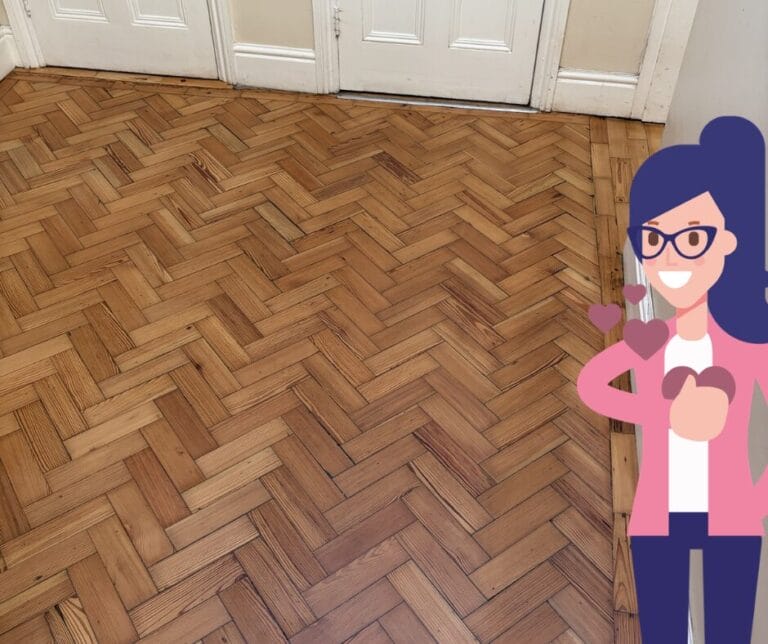
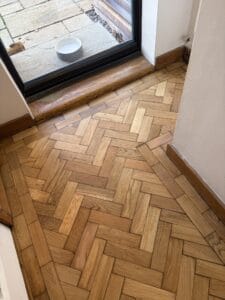
It’s my FAVOURITE type of wood flooring!! So basically, Parquet flooring is a wood floor made from small pieces of wood that they arrange into decorative patterns. Instead of long boards, a parquet floor is built from parquet blocks, often laid in herringbone, chevron, basketweave, or other geometric styles that create visual movement across the wood floor.
Most traditional parquet is made from hardwoods such as oak, maple, or walnut, chosen for their durability and the way their grain catches the light. Parquet is valued because it brings character into a room, and because solid hardwood flooring can often be sanded and refinished more than once over its life.
Hardwood flooring remains a popular renovation choice globally because it balances longevity with aesthetic appeal, which contributes to steady market interest (again, see Mordor Intelligence’s hardwood flooring market analysis).
Can All Types of Parquet Flooring Be Sanded?
Solid Wood Parquet
Solid wood parquet can usually be sanded multiple times because the top layer is real wood all the way through. It is typically around 15 mm thick, which gives enough depth for renovation without immediately hitting a thin top layer.
If your parquet floor is solid hardwood, sanding and refinishing is often the best route for parquet floor restoration and restoring parquet to its original beauty, as long as the blocks are stable and the subfloor is sound.
Engineered Parquet
Engineered parquet has a real hardwood veneer on top of a layered base. You can often sand engineered parquet, but the limit is the wear layer thickness. If the veneer is thick enough, sanding a parquet floor may be possible once or twice. If it’s thin, over-sanding can break through to the layer underneath, which cannot be disguised with varnish or oil.
A practical approach is to check the manufacturer’s details where possible, and always follow the manufacturer’s recommendations. If you cannot confirm the wear layer, be conservative with the sanding process and consider alternatives such as a screen and recoat.
Laminate Parquet
Laminate parquet cannot be sanded. It has a printed surface that mimics wood, but no real wood grain at the top. If you try to sand laminate parquet, you remove the printed layer and permanently damage the look of the parquet. In those cases, replacement of damaged blocks or full replacement is the only route.
How Many Times Can You Sand Parquet Floors?
There isn’t one answer that fits every parquet floor, but there are three factors that decide how many times you can sand parquet safely.
First is the wood floor thickness. Thicker wood lets you do more sanding, because each pass with the sander removes a small layer of wood. Second is previous refinishing. If a floor has already been sanded several times, there may not be enough top layer left for another full sand, especially in high-traffic areas where the surface has worn in an uneven manner. Third is the wear layer for engineered floors, which sets a hard limit.
As a general guideline, solid parquet can often handle several refinishes over its life, while engineered parquet is typically limited to 1 to 2 sands depending on veneer depth.
From a maintenance point of view, sanded floors often need refinishing every 7 to 10 years, depending on wear, foot traffic, pets, and how well the floor finish has been maintained. But if the floor is only dull, a full sand parquet job may not be necessary.
Signs Your Parquet Floor Needs Sanding
Sanding is usually the right choice when the damage has moved past the finish and into the wood itself. Some common signs include deep scratches or scuffs that catch your nail, patches where the finish has worn away, stains or discolouring that sit in the wood grain, and water marks that won‘t lift with just cleaning.
You’ll also see an uneven surface where parquet blocks have shifted a little, or where old finishes and level issues create a rippled look across the floorboard pattern. In those cases, the goal of sanding floorboards in parquet is to remove old finishes and level the surface, so the rest of the floor looks consistent again.
Benefits of Sanding Parquet Flooring
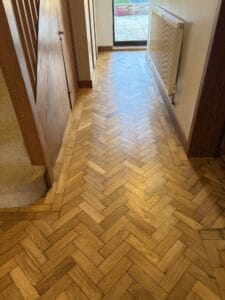
The first benefit is always its appearance. When you sand parquet flooring properly, you remove the dull, scratched surface and bring back the definition in the pattern. It can make a room feel brighter without changing anything else.
The second benefit has got to be lifespan. Floor restoration through sanding and refinishing protects the timber, reduces further wear, and helps prevent more serious damage that would require repairs or replacement.
The third is property appeal. A well-finished parquet floor signals care, and for many buyers, it reads as quality.
Home improvement spending has been extremely strong in recent years. Harvard’s Joint Centre for Housing Studies reported the US remodelling market reached about $567 billion in 2022, showing just how many homeowners prioritise improvements like flooring refinishing (see Harvard JCHS press release).
Step-by-Step Process to Sand Parquet Flooring
This section explains the process of sanding parquet in a clear sequence. If you’ve never sanded a floor before, read this as an overview of what “correct sanding” involves, and where parquet needs more care than a standard plank floor.
Step 1: Inspect & repair the floor
Start by checking for loose parquet blocks, movement, or gaps. Secure any loose pieces, replace blocks that are cracked beyond repair, and sort out the squeaks or bounce. If the blocks are lifting, sanding before repairs might make the problem a great deal worse, because the sander will catch the edges.
Step 2: Clean the surface
Thoroughly clean and remove all the debris. Any grit left on the surface can scratch during sanding and damage the blocks of wood. Check for nails or staples, and set them below the surface or remove them if you can.
Step 3: Sand with coarse grit (initial sanding)
Initial sanding will normally begin with a coarse-grit pass to remove old finishes. The machine choice matters here. A drum sander or belt sander can remove finish quickly, but it can also create dips if you pause or turn too sharply. For parquet sanding, many professionals use sanding machines that allow controlled, even removal across the floor.
Because parquet has grain directions that change across the pattern, some sanding is done diagonally or across the floor, rather than strictly with the direction of the grain, like you would on straight boards. The key is consistency, not speed. Don’t cross-grain sanding that gouges the surface, and avoid going against the grain so aggressively that the pattern looks torn.
Step 4: Medium & fine sanding (final sanding)
Once the old varnish or oil is removed, move through medium grit and then fine grit to refine the surface. This part of the sanding process is about smoothing and preparing for the finish, not removing lots of material. Fine grit helps the surface feel even and reduces visible scratch lines once the finish is applied.
Step 5: Edge sanding (edges and corners)
Parquet needs careful attention at the edge, especially around borders and door thresholds. Use the edge sander to handle edges and corners without leaving swirl marks. This is also where hand sanding can help, particularly on intricate patterns and tight spots where using the edge sander cannot reach cleanly.
Step 6: Stain (optional)
Staining is optional and depends on the wood type and the look of the parquet you want. Always test first, as parquet blocks can absorb stain differently depending on grain and previous exposure.
Step 7: Apply the finish
Finish options typically include lacquer (often polyurethane style products) or oil-based finishes. The right floor finish depends on how you will be using the room, whether you want a matte or sheen look, and how much maintenance you’re going to be able to do. Done well, sanding and refinishing create a long-lasting result that protects the timber and keeps the pattern crisp.
DIY vs Professional Parquet Floor Sanding
DIY can suit small areas, especially if you are confident with a sander and you can accept a learning curve. The advantage is cost. The downside is risk, because parquet patterns show mistakes quickly.
DIY often becomes stressful when the floor needs repairs, when the finish is thick, or when the pattern has borders, chevron detail, or uneven wear. Equipment rental also adds complexity, and a heavy drum sander can be unforgiving.
If you want the reassurance of an even finish and crisp pattern lines (especially on herringbone and chevron), it often helps to speak to a specialist first. You can see how we approach assessment, sanding, repairs, and finishing on our wood floor restoration service page, which should make it easier to decide whether your floor needs a full sand or a lighter refresh.
Professionals are also more likely to use dust-free sanding systems that reduce mess and disruption. Industry commentary and trade blogs show ongoing development in dust extraction and dust-free sanding setups, making refinishing more efficient and less disruptive than it used to be (see Alchemist Floor Sanding’s write-up on sanding tech improvements).
Common Mistakes to Avoid When Sanding Parquet
The most common mistake is using the wrong grit and trying to rush. If you jump grit levels too quickly, scratches can remain and only show after the finish is applied. Another is sanding too aggressively, which can round the edges of parquet blocks and soften the pattern.
Ignoring repairs is another big one. If blocks are loose, the sander can catch and tear them, which turns a refinish into a repair job. Over-sanding thin engineered parquet is also a frequent problem, because once the veneer is gone, it cannot be brought back with more varnish.
Finally, parquet requires respect for the grain of the wood and the changing grain directions in the pattern. If you sand in a way that creates obvious scratch lines, it does happen, believe me!!… and when it does, it can distract from the natural beauty you were trying to restore.
Alternatives to Sanding Parquet Floors
If sanding is not possible, or if the floor does not need that level of intervention, there are calmer alternatives.
Deep cleaning can lift grime and improve colour without removing material. A screen and recoat can refresh the finish if the wood beneath is still in good condition. Floor polishing can improve the sheen and reduce the look of light scuffs. In more localised damage, replacement of damaged blocks can solve the worst areas without sanding the entire parquet floor.
These options are often better when the wear layer is thin, when the floor has already been sanded many times, or when the goal is simply to improve appearance rather than correct damage.
Maintenance Tips to Reduce Future Sanding
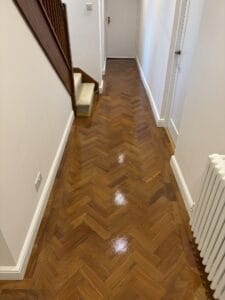
Small habits will reduce how often you need to sand and refinish your parquet wood floor. Using protective pads under all your furniture, sweep regularly to keep that grit from acting like sandpaper as you all walk over it, and avoid excessive moisture when cleaning. Place rugs in high-traffic zones and entry points to reduce wear. If your finish allows it, periodic recoating can extend the time between sanding cycles and protect the wood floor from deeper scratches.
And Finally…
Yes, you can usually sand parquet flooring, but only when the surface is real wood, and there is enough thickness or wear layer to work with. Solid wood parquet is usually the best candidate for sanding, and engineered parquet can be sanded if the veneer allows it. Laminate parquet cannot be sanded… It’s not real wood, so there isn’t a lot restoration would be able to do apart from making it look worse.
The safest path is to assess the floor first, then choose the least aggressive option that still delivers the result you want. If the pattern is complex, the floor is thin, or you want a flawless finish, professional help often protects the floor and your peace of mind.