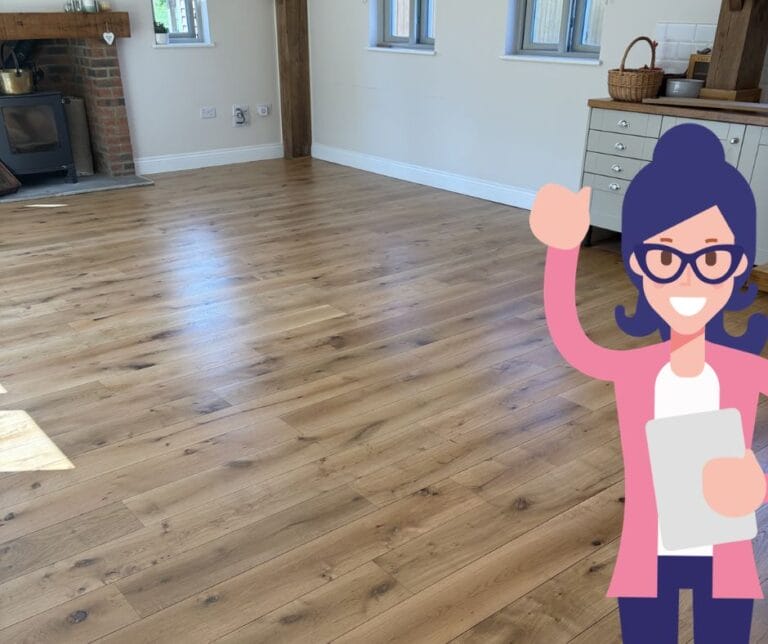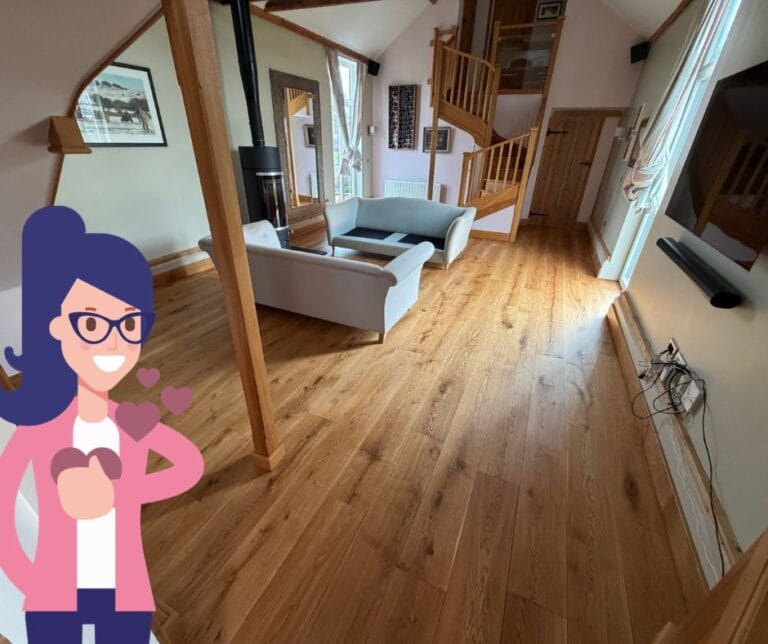
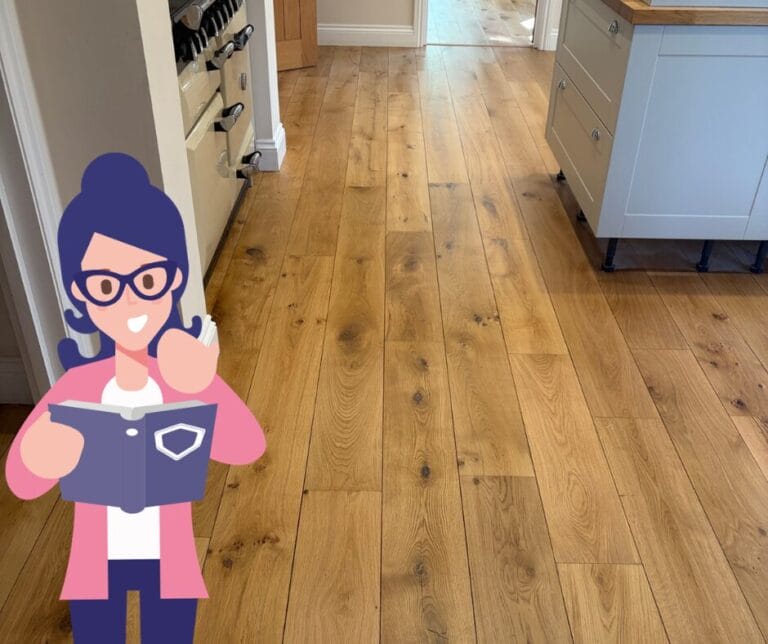
So, can you varnish wood floors without sanding? Yes, you can varnish wood floors without sanding if the existing finish is still intact and the floor only shows light wear.
This is usually done using a screen and recoat process, where the surface is lightly abraded, and a new coat of varnish or polyurethane is applied.
If there are deep scratches, stains, peeling finish, or bare wood, the floor would need to be sanded properly before applying a new finish.
Key takeaways
- Wood floors can sometimes be varnished without sanding.
- Screen and recoat is the most common method.
- Works best when the existing finish is still intact
- Usually 30 to 50 per cent cheaper than full floor sanding
- Deep scratches, stains, or peeling varnish still require sanding.
- Preparation is essential for a lasting result.
Why wood floors are usually sanded before varnishing
Most wood floor restoration starts with sanding for a reason. It removes the old finish, clears surface damage, and creates a clean base for a new floor varnish.
When you sand the floor back to bare wood, you expose fresh wood fibres. This allows the new finish to bond properly and last longer. It also gives you full control over stain colour and finish.
Without sanding, you are not rebuilding the floor. You are refreshing the existing finish. That can work well, but only if the surface of your floor is still in good condition.
If the old finish is worn through, contaminated, or uneven, applying varnish directly over it can lead to poor adhesion and early failure. If you are unsure, it is worth understanding how a professional wood floor sanding service assesses whether sanding is needed.
When you can varnish wood floors without sanding
A wood floor without sanding can still be restored when the wear is only on the surface.
This usually means the existing finish is intact, there is no bare wood showing, and the colour is still consistent across the floor. Light scratches, dullness, and general wear and tear are all signs that the floor may only need a surface refresh.
In homes like this, the goal is not full floor restoration, but maintaining the protective layer. This is often used as part of ongoing floor maintenance or before selling a home to improve appearance.
When sanding is still required
Some floors need more than a surface treatment. If the damage goes deeper, sanding is the only reliable option.
This includes deep scratch marks, dark stains, peeling or flaking varnish, and areas where the surface of the wood is exposed. Warped boards or uneven wear across the floor are also signs that sanding is needed.
If you want to change the colour of the floor using stain, sanding is also required. The stain needs to penetrate the wood grain, which is not possible through an existing finish.
The most common method is screen and recoat.
Screen and recoat is the standard method used to refinish a hardwood floor without sanding.
The process involves lightly buffing the floor with an abrasive screen, removing the dust, and applying a new coat of varnish or water-based polyurethane. This creates a slightly roughened surface so the new finish can bond to the old.
This method avoids removing a full layer of wood, which helps preserve the thickness of the floor. It is especially useful for engineered wood floor surfaces, where the wear layer is limited.
It also creates far less dust than traditional sanding, which makes it a more practical option in lived-in homes.
Step-by-step guide: how to varnish wood floors without sanding
- Start by inspecting the floor carefully.
Look for bare wood, peeling finish, or serious damage. If you find these, sanding is likely required.
- Clean the floor thoroughly.
Use a suitable floor cleaner to remove grease, polish residue, and dust. A poorly cleaned surface is one of the main reasons varnish fails.
- Lightly buff the floor.
Using a floor buffer and abrasive screen pad. This creates a surface the new coat can bond to.
- Vacuum the floor and
Remove all dust. Even small particles can affect the final finish.
- Apply a thin coat of varnish or polyurethane.
Many professionals use water-based varnish because it dries faster and has a lower odour.
- Allow drying time between coats.
Apply a second coat if needed for durability. Most floors need two to three coats, depending on use.
Let the floor cure fully before heavy use. Light traffic is usually fine after 24 hours, but full curing can take several days.
Pros and cons of varnishing floors without sanding
For the right floor, this approach offers a simpler way to improve the look without major disruption. It is faster, cleaner, and more cost-effective than full sanding.
It also helps preserve the existing wood, which is important for older floors and engineered wood flooring.
However, it cannot remove more serious damage or correct uneven surfaces. Scratches will still be visible, and colour changes are limited. It is best seen as a maintenance step rather than a full refinish.
How long does sandless floor refinishing last?
In most homes, sandless floor refinishing lasts around three to five years.
High traffic areas may wear sooner, especially in busy households. Used correctly, it extends the life of the floor and delays the need for full sanding.
Cost comparison: sanding vs no-sand refinishing
When deciding what’s the best way to restore your floor, cost often comes into it.
| Full floor sanding | £20 to £65 per m² | Damaged or heavily worn floors |
| Screen and recoat | 30 to 50% less | Light wear and maintenance |
A cheaper option only works if the floor is suitable. If sanding is needed and skipped, the new finish may not last.
Expert tips for better results
Always check compatibility between the old finish and the new one before applying it across the whole floor.
Avoid applying varnish over wax-treated surfaces, as this can prevent proper bonding.
Use water-based polyurethane for faster drying and a more natural finish where possible.
If you are unsure, speaking to a flooring expert or contractor can help you decide the right approach before starting.
FAQs
Can you apply polyurethane over old varnish?
Yes, as long as the surface is clean and lightly abraded, so the new coat can bond properly.
Will scratches disappear without sanding?
No, deeper scratches will still be visible after refinishing.
Can you change floor colour without sanding?
Only slightly. A full colour change requires sanding back to bare wood.
Is sandless refinishing safe for engineered wood?
Yes, and it is often recommended because engineered wood has a thinner wear layer.
What this means for your floor
Well… you can varnish wood floors without sanding, but only when the floor is still in good condition.
For lightly worn floors, this method restores shine, protects the surface, and extends the life of the finish. If the damage is deeper, sanding remains the better option.
If you are unsure, start with the condition of the floor. That decision will guide everything that follows.