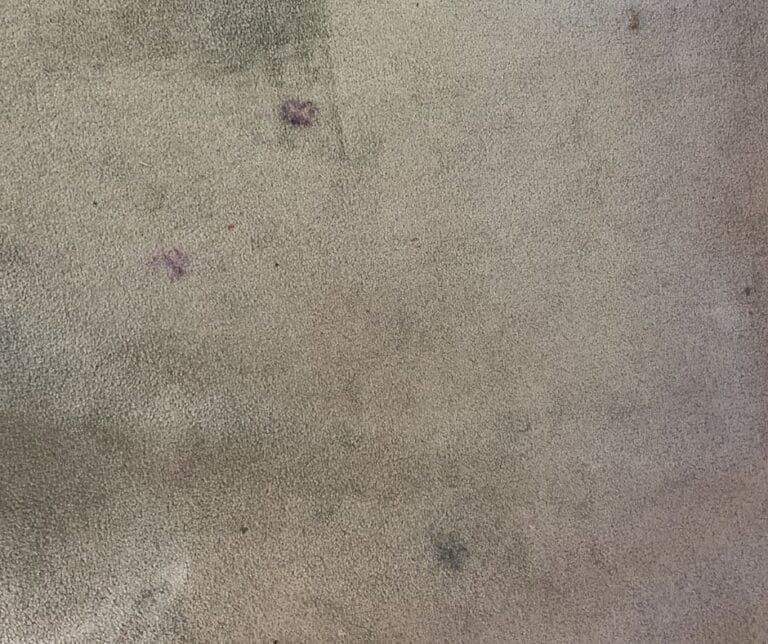
Why is ink on your carpet one of the hardest stains to remove?
Ink is designed to absorb into surfaces and stay there… whether it’s paper, card, fabric or packaging. That means it bonds fast, spreads easily, and resists simple wipe-up attempts. When ink hits carpet, it soaks into the fibres and often spreads beneath the surface pile. This makes it appear smaller than it actually is.
Different types of ink create different challenges:
- Ballpoint and gel pens often contain oils that repel water.
- Water-based markers seem harmless, but can wick deep into the fibres.
- Printer inks or permanent markers may contain dyes that chemically bond with carpet materials.
And unlike coffee or mud, ink doesn’t simply sit on the surface. It moves quickly… and so do the risks if it’s not handled properly.
This is a customer’s rug… even as a professional there is only so much we can do:
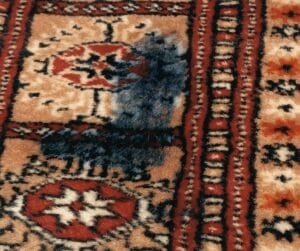
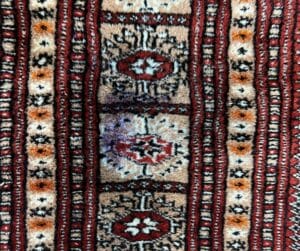
Why we don’t recommend DIY stain removal On Ink
You’ve probably seen dozens of blogs or videos claiming to show you how to get ink stains out of carpet using common household items. These articles suggest:
- Rubbing alcohol
- White vinegar and dish soap
- Hairspray
- Bicarbonate of soda
- Carpet sprays from supermarkets
But these methods are unreliable, and worse… they can ruin your carpet. Here’s why:
- Alcohol can bleach colours
Many carpets, especially those with synthetic dyes or wool blends, react poorly to alcohol. The result is often a patch that’s free of ink, but no longer matches the rest of the floor. - Vinegar can spread the stain
Acid-based solutions can cause water-based ink to wick outward, creating a larger problem under the surface. - Hairspray often leaves residue
Even alcohol-rich formulas contain resins and additives that attract dirt and dust. A temporary fix becomes a long-term stain. - Scrubbing sets the stain
Aggressive motion pushes the ink deeper into the pile and can distort the twist or texture of the fibres.
Even if the surface looks “improved” after these treatments, hidden damage is often already done.
What a professional carpet cleaner does differently
At Art of Clean, we take a fibre-first approach. That means we don’t guess, blot, or soak. We start by identifying:
- The type of ink
- The carpet material
- The age of the stain
- Whether it’s been treated before
Only then do we select a solution, often a WoolSafe-approved stain remover, matched to the ink type and carpet structure. Our team follows a controlled process that includes neutralisation, blotting, cold rinse extraction, and pile lift (if needed). This removes the stain safely, without harming the fibres or backing.
You can read about our full cleaning process here.
But will the ink come out?
In many cases, yes… especially if we’re the first to treat it. Fresh ink stains, even from permanent markers, can be broken down safely when caught early and not contaminated with DIY attempts.
But in truth, not every stain can be removed completely. Some inks contain dyes that create a chemical bond with certain carpet fibres. If the stain has been heat-set, scrubbed, or treated with the wrong product, we may not be able to fully restore the colour, but we’ll be honest with you about that from the start.
What we can guarantee is this: no further damage. That’s often not true with DIY.
What to do if ink has just spilt
We understand the urge to act quickly. And you should, but carefully.
Do:
- Gently place a clean, dry towel or paper towel over the stain
- Apply light pressure (no rubbing) to absorb excess
- Keep pets and feet away from the area
- Book a clean as soon as possible
Don’t:
- Use heat, hairdryers or steam
- Add water, vinegar, alcohol or any shop-bought product
- Scrub or rub
- Panic
The longer the ink sits, the harder it becomes to remove, but panic-based DIY methods often do the most damage in seconds. If in doubt, stop. Call us. We’ll talk you through it before we book anything.
How do we prevent future ink stains?
Ink may be a rare accident… but when it happens, it’s memorable. One of the easiest ways to reduce the risk is to simply keep pens, markers, and printer cartridges away from carpeted areas. Set clear rules for where children can use art supplies. Always close pens when not in use.
For high-use family homes or busy living rooms, our Maintenance Plan can help you stay ahead of stains with scheduled deep cleans and priority response for accidents. That means fewer worries when the unexpected happens.
For more advice on everyday care, visit our Knowledge Centre.
All our cleaning agents and methods are WoolSafe-recommended… meaning they’ve been tested and certified as safe for wool, natural fibres, and professional use. You can view the approved product list at The WoolSafe Organisation.
This ensures our treatments meet UK fibre care standards and gives our clients added peace of mind.
Key takeaways
- DIY methods can permanently damage carpets.
Household tips like vinegar, alcohol or hairspray often cause dye bleeding, fibre distortion, or residue buildup. - Ink types vary… and each needs specific treatment.
Permanent, water-based and oil-based inks each react differently. Misidentifying the type can worsen the stain. - Wool, natural fibres and dyed carpets require professional care.
Damage from incorrect treatment may not be repairable. - Professional carpet cleaning is the safest route.
WoolSafe-approved products, fibre-matched methods, and no risk of over-wetting or chemical reaction. - Act fast… but do nothing.
Place a clean towel over the stain and avoid rubbing or adding anything. The sooner we assess it, the better the result.
If you’re worried about ink on your carpet
Don’t try to fix it. Just call us.
You’ve done nothing wrong, these things happen. But what happens next matters more. We’ll talk you through your options clearly, explain what we see when we arrive, and only proceed if it’s safe to do so.
Contact us here… we’re here when you need us.