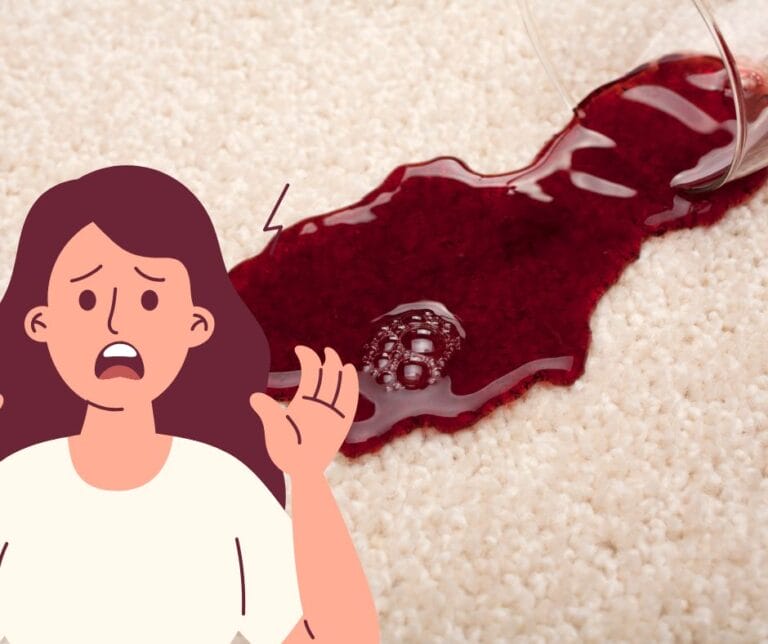
This guide shares how to get red wine out of your carpet and methods that work… and what to avoid… when you’re dealing with a red wine stain. No harsh chemicals. No vinegar tricks. Just safe, expert-informed steps that protect your carpet, not damage it.
First 60 Seconds: What You Should Do (and Not Do)
The most helpful action you can take right after red wine hits your carpet is surprisingly simple: blot… don’t rub.
Reach for a clean white cloth and gently press on the stain, working from the outside in. This helps absorb the wine without spreading the pigment further across the fibres.
If you have some club soda on hand, pour a little over the stain and continue blotting gently. The carbonation can help lift some of the pigment from the surface, especially on synthetic carpets.
And here’s what not to do: don’t reach for salt, vinegar, hot water, or bleach-based stain removers. These DIY suggestions can cause the pigment to set — or worse, damage the carpet fibres permanently.
Why Red Wine Is So Tough on Carpets
Red wine contains a cocktail of chromogens, tannins, and natural acids. These compounds don’t just stain… they bond with carpet fibres on a chemical level. If the wine isn’t diluted quickly or is treated with the wrong method, it becomes harder to remove without causing further discolouration or fibre damage.
Natural materials like wool or sisal are especially vulnerable. They absorb pigment more deeply, and they react poorly to aggressive cleaning methods. Even synthetic carpets can suffer if treated with the wrong cleaner or scrubbed too hard.
The bottom line? A red wine stain is tricky… but it can be handled safely if you act calmly and avoid common mistakes.
Should You Try a DIY Method? Here’s Why We Say No
It’s easy to find DIY “hacks” online: white vinegar, baking soda, even hydrogen peroxide. But here’s the truth we see every week… these home methods cause more problems than they solve.
Vinegar is acidic and can degrade carpet backing. Baking soda often leaves a residue that attracts dirt. And hydrogen peroxide may bleach your carpet permanently, even if the stain lifts.
Many of the red wine stains we treat professionally have already been made worse by good intentions and Google searches. That’s why we gently advise: don’t risk it. If the stain matters, and the carpet is worth saving… don’t experiment. Protect it.
What Actually Helps (and Keeps Your Carpet Safe)
If the stain is fresh and the carpet isn’t delicate, cold club soda is still one of the safest tools you can use. Its mild carbonation helps lift pigment from the surface… and unlike acidic or chemical treatments, it doesn’t risk discolouration.
Gently blot with a white cloth. Don’t rub. If needed, rinse lightly with cold water and blot again. Leave the area to dry naturally… avoiding heat or heavy foot traffic.
If you’ve already tried something and the stain has worsened or changed texture, don’t panic… but do stop. The next best step is to bring in a professional with specialist knowledge of fibre care.
What to Do for Dried or Older Wine Stains
If the red wine stain has dried, don’t assume it’s permanent… but do treat it differently.
Start by rehydrating the area slightly using cold water and a soft cloth. This loosens the stain and makes it more responsive to treatment.
Then, rather than layering on home remedies, reach for a commercial product designed for carpet fibres. Choose one that’s labelled safe for wool and tannin-based stains… and always follow instructions carefully.
Still unsure? For high-value or sensitive carpets, it’s safer to skip products altogether and call someone who understands fibre structure. A technician trained in professional stain removal can lift dried wine stains without risking damage to the carpet pile.
When It’s Time to Call a Professional
There’s no shame in getting help… in fact, it’s often the only way to truly protect your carpet from long-term damage.
You might want to speak to a professional carpet cleaner if:
- The stain remains after gentle blotting or commercial treatment
- Your carpet is made of wool, or is an antique or high-value piece
- The stain reappears after drying
- Previous cleaning attempts have changed the texture or colour of the carpet
Professional cleaners use pH-safe, fibre-specific methods and equipment that aren’t available over the counter. That’s the difference between a stain being removed… and your carpet being rescued.
A Word on Prevention
It’s not always possible to avoid spills. But it is possible to give your carpet more protection if they happen.
We recommend having a fibre protector (like Scotchgard) professionally applied every 12–18 months, especially in living areas or dining rooms where wine is often served.
Using throws in high-risk areas or choosing machine-washable runners for family zones can also reduce long-term impact.
And finally, keep a basic response kit handy… cloths, cold water, and club soda… so you’re ready the moment a spill occurs.
Before You Try Something Risky
We know how tempting it is to act fast and grab whatever’s under the sink. But red wine is one of the stains we get called about most… and sadly, many have already been set in by good intentions.
If you’re unsure whether your method is safe — or if you’ve already tried something that didn’t work… pause. You’ve got options. And most importantly, you’ve got time.
We’re here if you’d like to discuss it further before proceeding. No pressure. Just honest advice.
Not in our Catchment… Don’t worry, the NCCA, also known as the National Carpet Cleaning Association, is here to help you find your local, friendly carpet cleaner.