Understanding why blood stains behave differently
Blood is not like tea, coffee, or muddy paws. It has a protein structure that binds quickly to carpet fibres.
This is also why a hot cloth or a steam cleaner can make matters worse.
Heat alters the proteins and encourages them to cling more tightly to the carpet pile. Think of it a little like cooking an egg. Once set, it is not going anywhere without specialist help.
This is also why you will see so much emphasis on cold water. Cold water slows the bonding process and lifts the blood gently away from the fibres instead of forcing it deeper. That small difference in approach is often what prevents permanent staining.
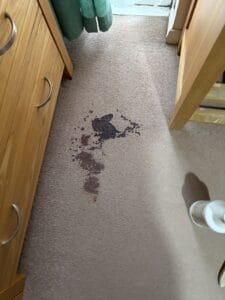
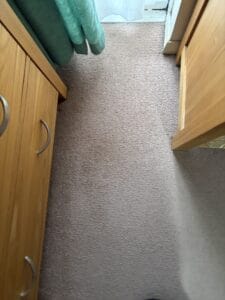
This is the before and after next to each other… our client was very lucky:
Start with safety and a quick assessment
Before anything else, take a moment for safety… Blood is a biological material, so put on disposable gloves and use fresh white cloths. This keeps things hygienic and protects your carpet from dye transfer. A coloured cloth can leave a secondary stain that is far harder to remove than the blood itself.
If the stain looks large, or if you know it has soaked through to the underlay, pause and consider whether this is something you want to tackle alone.
There is no judgment in calling for help. Professional carpet cleaners handle this type of situation every day, and sometimes it is the easiest way to protect an expensive or delicate carpet.
If you are happy to continue, the next step is to understand what kind of carpet you have.
Wool carpets demand gentler products. Synthetic fibres tend to be more forgiving but can still be damaged by harsh chemicals. If you do not know your carpet type, check the manufacturer’s label if you still have it, or look beneath the edge of the carpet for a small backing tag. You can also look at receipts or installation documents if you have them tucked away. When in doubt, treat the carpet as delicate and avoid anything strong or oxidising.
=[
How to tackle a fresh blood stain on your carpet
A fresh stain is the most forgiving. If you catch it early, you may remove it completely without any cleaning agents at all.
Start by pressing a clean, white cloth gently into the stain. You are looking to lift the blood, not push it around. Blotting repeatedly from the outside toward the centre prevents spreading. You might not see dramatic results at first, but steady, calm work is often enough.
Next, use a spray bottle filled with cold water. A light mist is ideal. You do not want to soak the carpet. Over-wetting can cause moisture to reach the underlay, creating a different issue. Once the carpet is lightly damp, continue blotting. You will notice the stain loosening with each pass of the cloth.
If cold water alone does not finish the job, move to a mild detergent mix.
Add a small amount of non-bleach washing-up liquid to cold water and dab it onto the stain with a fresh cloth. This helps break up the proteins without disturbing the fibres. Then rinse the area with a clean cloth slightly wet with cold water to remove the soap. Detergent residue attracts soil, so this rinsing step matters.
Dry the area by pressing with a dry cloth. When it feels damp but not wet, open a window or use a fan to encourage airflow. Once fully dry, a light vacuum will lift the carpet pile back to normal.
What changes when the blood stain has dried
A dried blood stain often looks alarming, but it is still manageable with the right touch.
The first step is to loosen the dried residue without damaging the carpet. Use the edge of a blunt spoon and gently scrape the surface. You will see small flakes lift away. Vacuum these up using the hose attachment, then stop. Do not brush or scrub. Brushing can spread the particles and embed them.
Once you have cleared the dry residue, mist the stain with cold water. This softens the remaining blood and prepares it for cleaning. Blot gently. You may need to repeat this several times to rehydrate the stain before any cleaning product can work effectively.
For dried stains, an enzyme cleaner is often the most successful option.
Enzymes break down the proteins in blood at a molecular level. They do not rely on heat or friction, which makes them safer for carpet fibres.
Products labelled for pet stains often use enzyme technology, because pet accidents have similar protein structures.
PLEASE DO THIS CAREFULLY Apply the enzyme cleaner as directed by the label. Most require a dwell time so the enzymes can work. After that, blot again, rinse with cold water, and allow the area to dry fully before vacuuming. When in doubt, get your professional out!
Should hydrogen peroxide ever be used?
Hydrogen peroxide is often mentioned in online cleaning tips, but it is not suitable for use on carpets.
Although it can break down some organic stains, it does so by oxidising the fibres, and that process is unpredictable.
On many carpets it causes permanent lightening, patchy bleaching, or colour distortion. This is especially true for wool and natural fibres, but even synthetic carpets can be affected.
The problem is that damage does not always appear straight away.
A patch may look fine when first applied, then lighten over the next few hours. Once that happens, the fibre colour cannot be restored. Even at low concentrations, peroxide carries this risk, and the outcome varies from carpet to carpet.
For this reason, we do not recommend using hydrogen peroxide at home. The potential for permanent fibre damage is far greater than most people realise, and there are safer methods available that protect both the carpet and the surrounding area. If a stain is stubborn enough that peroxide feels like the only option, it is a sign that professional cleaning is needed instead.
Why vinegar & baking soda are not always reliable
There is a lot of online advice suggesting vinegar or baking soda for blood stains. Vinegar, when diluted properly, can help in mild cases.
It alters pH and can loosen the stain slightly, but it is not strong enough for deeper or dried blood. Baking soda absorbs moisture and deodorises, yet it leaves a powder residue that can attract dirt if not completely removed.
These options are rarely harmful but they are also rarely the most effective. They sit in the middle ground. If you want the highest chance of success, cold water, gentle detergent, or an enzyme cleaner usually outperform the old household remedies.
Protecting delicate carpets
Cambridge has many period homes, heritage rugs, and high-quality wool carpets.
These fibres need extra caution. Wool in particular does not tolerate strong oxidising agents and may felt or distort if over-wetted. If your carpet falls into any of these categories and the stain is more than a few hours old, it is worth asking for help rather than experimenting.
Our team at Art of Clean has specific wool-safe methods designed for delicate fibres.
You can learn more about how we handle this through our overview of
These controlled processes protect the colour, preserve the pile’s structure, and remove stains without exposing the carpet to harsh chemicals.
When to hand the stain over to a professional
There are a few situations where professional cleaning is the wisest option. If the stain is large or has been left for days, it may have reached the underlay.
The carpet is wool, silk, or part of a matched set, you may want to protect the investment. If you have already tried to clean the stain and it has spread, darkened, or changed colour, then the fibres need a more technical approach.
A trained technician has access to fibre-safe products, controlled heat, and tools that lift stains without overwetting. At Art of Clean we use a detailed assessment before we begin any stain removal, and you can see our structure by visiting our service levels page. You can also explore our wider advice hub in the Knowledge Centre to understand how carpets behave under different conditions.
If you feel the stain is beyond what you want to attempt yourself, our team is easy to reach through the contact page. A short conversation is often enough to decide the next step.
Key takeaways
- Cold water is the safest starting point because heat will set blood stains.
- Blotting is more effective than rubbing because rubbing spreads the stain and may set the blood stain into the fibres of your carpet.
- Mild detergent and enzyme cleaners offer the best balance of safety and performance.
- Wool and delicate carpets need gentler methods and may require professional care.
- Calling for help early can prevent permanent damage.