Key takeaways
- Lift first (rubber glove or squeegee), then vacuum, it’s the quickest way to remove embedded fur.
- Lint rollers are ideal for quick surface touch-ups, not deep hair.
- Seams, cushion edges, and under cushions are where you will find build-up hides.
- A washable throw for your pet’s favourite spot should reduce sofa fur lots.
- If the sofa looks dull or smells after you remove the hair, you might need a deeper clean, not more vacuuming.
Why does fur builds up so quickly? (even when you clean)
It’s not that you’re doing anything wrong. Pet hair is light, static-prone, and shaped to catch on fibres. On upholstery, hair doesn’t just sit on the surface. It works its way into seams, under cushions, and into the texture of the fabric itself.
That’s why a quick vacuum pass can feel like it barely touches the problem. The goal is to lift hair from the weave first, then vacuum it away properly.
The best household hacks for lifting hair fast
These are the “no special equipment” options that work well in UK pet homes.
- Damp rubber glove
Put on a rubber washing-up glove, dampen it slightly, and rub your hand over the fabric in one direction. The friction helps the hair clump and stick to the glove so you can peel it off in handfuls. It’s especially good on seat pads, backs, and the sides of cushions. (pdsa.org.uk)
A small tip that helps… do one section at a time, and keep your strokes going in the same direction. If you scrub in circles, you can push hair deeper into the fabric.
- Rubber squeegee
A small window squeegee is brilliant for fabric sofas because it drags embedded hair out of the weave and into lines you can gather. Use it on the larger flat areas first, then switch to the glove or a brush for edges and seams.
This method is particularly satisfying on microfibre and tightly woven fabrics where hair seems “stuck”.
- Lint roller or sticky tape
Lint rollers are perfect for quick surface hair, arm rests, and the front edge of the seat cushions, where clothing tends to pick up fur. For a quick fix, wrapping wide packing tape around your hand (sticky side out) works in a pinch.
Just keep expectations realistic. Rollers are great for the top layer, less great for hair that’s worked into the fabric.
Tools and equipment that make this easier (and what each is best for)
You do not need loads of kit. The trick is choosing tools that match the job, deep lift, detail work, and finishing.
- Vacuum with pet or upholstery attachments
A vacuum is essential for finishing, especially after you’ve loosened the hair with a glove or squeegee. Upholstery tools help you get into the fabric without blasting hair around. A crevice tool is your best friend for seams and the gap between cushions.
We also recommend vacuuming and using tools designed for pet hair in the home, especially for upholstery and carpets.
A useful technique, vacuum slowly in overlapping lines, then do a second pass in the opposite direction. It lifts more hair than one quick pass.
- Rubber bristle upholstery brush
Rubber bristle brushes are excellent for textured fabrics and awkward edges. They’re also great if you don’t love the feel of using your hands with a glove. Use the brush to gather hair into a pile, then vacuum.
- A “pet hair remover” rubber block or sponge
Some people use rubber blocks (often sold as pet hair removers). The benefit is that they grip hair well, and they can be easier on your wrist than repeated glove passes. Use gentle pressure, especially on delicate upholstery.
Sofa-specific tips (fabric, leather, and the hidden fur zones)
Fabric sofas
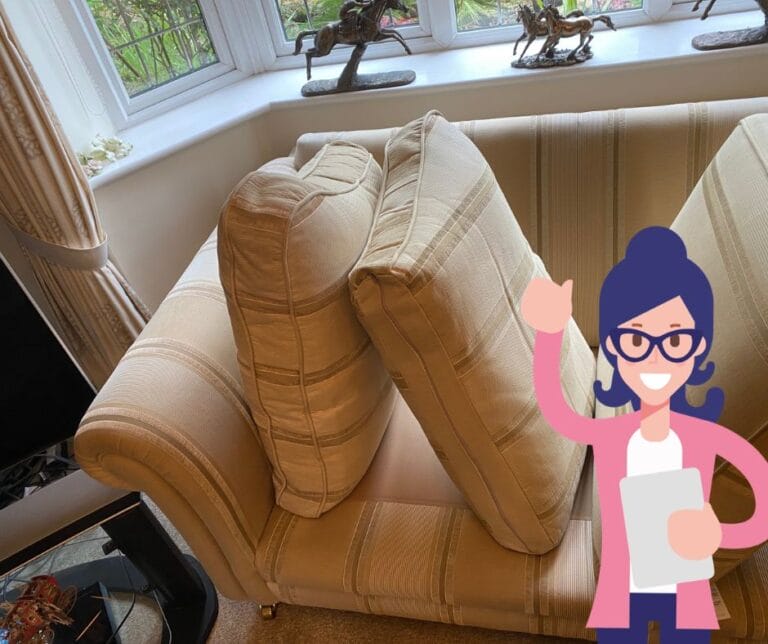
Fabric really holds lots of hair in the weave and also hides it in seams. Start with a glove or squeegee first, then vacuum. But, pay attention to the back cushions and the seat seam line, that’s often where fur packs in and releases onto clothes.
If your sofa has loose covers, wash them following the care label. Regular washing can make the room feel fresher because you’re removing dander and oils as well as hair.
Leather and faux leather
Hair usually sits on the surface, so this is a quicker job. Vacuum gently with a soft brush attachment, then wipe with a slightly damp cloth. Avoid soaking or harsh cleaners, especially on real leather.
The tricky bits people miss
Most fur buildup is not on the obvious flat areas. It’s here:
- Where cushions meet (that gap at the back of the seat pad)
- Under cushions
- Along the piping and seams
- The “pet corner” where they curl up repeatedly
If your sofa always looks furry again, even after cleaning, it’s usually because those areas weren’t tackled.
A simple routine that keeps build up down
You don’t need to do a deep clean every time. A light routine works best when it’s easy to repeat.
Weekly, 10 to 15 minutes
Lift hair first with a glove or squeegee, then vacuum slowly with the upholstery tool, focusing on seams and edges. Finish with a lint roller on the arms and front edge if you want a tidy look.
Quick midweek reset, 2 minutes
Run a lint roller over the areas your clothes touch most, and do a quick crevice tool pass between seat cushions. This will stop build up becoming a bigger job for you at the weekend.
The benefit isn’t just appearance… It’s less fur floating around, less hair transferring to clothes, and less of that “pet home” feeling when someone pops in unexpectedly.
The risk is marks, residue, or changing the feel of the fabric, especially with velvet, linen blends, and upholstery that watermarks easily. If you try any spray, patch test somewhere hidden and keep it very light. If your sofa is prone to marking, skip sprays and stick to rubber tools plus vacuum.
Prevention that feels realistic (not “be perfect”)
If you want less fur on the sofa overall, the best prevention is to catch it where your pet actually lies.
- Use a washable throw in the favourite spot
This is the biggest difference for the least effort. Shake it outside, wash it regularly, put it back. Your sofa stays presentable and you’re not constantly removing fur from the main upholstery.
- Keep grooming practical
Regular grooming helps reduce shedding, but it doesn’t have to be a full session. Short and frequent brushing works better than occasional long battles, especially during heavier shedding periods.
- Create a “pet zone”
If your pet always chooses one end of the sofa, lean into it. Make it their cosy zone with a blanket. You’ll still have cuddles, and you’ll clean the blanket rather than the whole sofa.
When fur is part of a bigger problem (dander, odour, dullness)
Sometimes fur is only the visible part. Upholstery can hold pet oils, dander and everyday dust, which can leave the sofa looking flat or holding onto smells, even when you keep on top of hair.
If you want a deeper reset, these pages may help:
- Upholstery cleaning service
- Is your upholstery crying out for a clean?
- Pet urine in carpets and rugs (why odour lingers)