Key takeaways
- Dust-controlled sanding captures most dust at the sanding head, rather than letting it spread through the home, as shown in clean air sanding systems.
- Wood dust is a recognised health risk, including links to nasal & sinus cancers in occupational exposure settings, which is why proper dust control matters.
- Cleaner air normally means a cleaner finish, because you get fewer particles landing in lacquer, oil, or seal coats as they cure.
- A professional floor sanding process involves multiple sanding stages, repairs, and finishing, not a single pass.
- “Dust-free” is a practical term, not a promise of zero particles… edges and corners can still produce small amounts of dust.
Why floor sanding feels like a big decision
If you love the look of natural wood, sanding and refinishing can feel like the right move, but the thought of dust in every room puts people off. Traditional sanding has a reputation for turning a calm home into a building site, with fine dust settling on skirting boards, shelves, and soft furnishings.
That worry is valid. Fine sanding dust can stay in the air for a long time, and it is not something you want drifting through bedrooms or sitting on kitchen surfaces. Therefore, dust control is not a nice extra… it is part of doing the job with respect for your home and your air quality, which aligns with the HSE guidance on wood dust.
What is dust-free floor sanding?
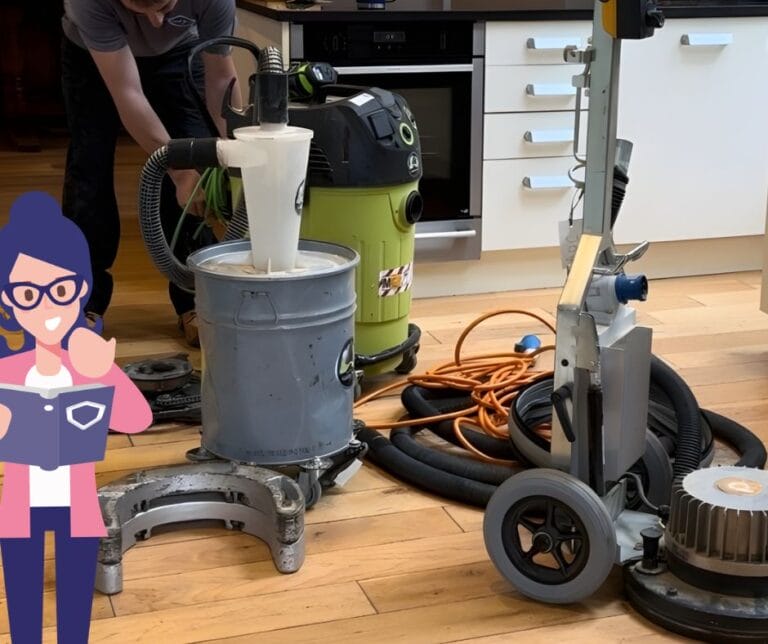
Dust-free (sometimes called dustless floor sanding) is a method of floor restoration that uses modern sanding machinery with sealed connections to powerful extraction systems. The aim is simple: capture dust where it is created, before it becomes airborne and moves through your home.
A good system combines:
A floor sander that is specifically made for controlled extraction…
Sealed hoses and fittings…
And industrial vacuum extraction that pulls sanding dust straight into containment.
Many professional systems also use HEPA-grade filtration to help trap very fine particles, as described in Bona’s approach to clean air sanding.
How does dust-free floor sanding work, step by step?
People often assume it is one machine and one pass, but the best results come from a staged approach. Here is what a professional floor sanding service usually looks like.
Step 1: Inspection & preparation
The floor boards are checked for any movement, damage, protruding nails, old adhesive, and previous coatings. Rooms are prepared so the sanding can happen cleanly, with sensible protection where needed.
Step 2: Primary sanding
A belt or drum-style sander levels the surface and removes old finishes. With dust-free sanding systems, extraction runs continuously during sanding, pulling dust away at the source.
Step 3: Edge sanding
Edges and corners need smaller machinery. This is where “dust escaping” can happen if a system is poorly connected… good kit and good technique matter as much as the label.
Step 4: Repairs & gap filling
If there are cracks, gaps, or minor defects, you can use fillers or resins to create a smoother, more even surface before the final sanding stages.
Step 5: Fine sanding & buffing
Progressive grits refine the surface, and that makes the finish look even and feel smooth underfoot. This is where random orbital sanders (such as a Trio style approach) can help reduce directional scratch marks and improve the final look.
Step 6: Finishing
Your chosen finish is applied, often lacquer or oil, sometimes other protective seal systems, depending on the floor and the look you want. A cleaner environment helps reduce dust inclusions in the coating, and the finish tends to look clearer and more consistent.
If you are exploring options, you can see how we approach professional floor sanding on our wood floor sanding service page.
Why dust-free sanding is better than traditional sanding
Older sanding setups often relied on basic collection bags, which catch heavier debris but allow fine dust to drift into the room. That is the dust people remember cleaning for days afterwards.
With dust-free sanding, the difference is usually felt in three ways:
Less disruption
There is still work happening in your home, but it is typically calmer and cleaner, with far less visible dust settling on surfaces.
Cleaner working conditions
Dust capture at the sanding head helps protect both the household and the flooring professionals.
Better finishing conditions
When there is less airborne dust, there is less chance of particles landing in wet coatings… the final look is often smoother and more even.
The health angle people forget about
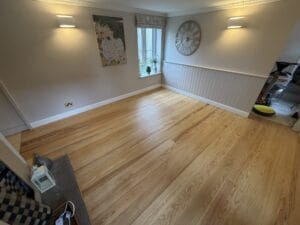
Most homeowners think about dust as a mess. But did you know that wood floor dust is also a health consideration?
The UK Industrial Injuries Advisory Council notes that wood floor dust is outlined by the IARC (International Agency for Research on Cancer) as a definite human carcinogen, with evidence of increased risk of sinonasal cancers in occupational exposure settings, referenced in the UK IIAC report and the IARC monograph listing.
That does not mean a one-off home sanding job equals the same risk profile as years of workplace exposure. However, it does explain why dust control is taken seriously, and also why reputable sanding contractors invest in proper extraction and filtration rather than treating dust as unavoidable.
Key benefits of dust-free floor sanding.
Cleaner home, less cleanup
Dust control reduces the fine dust that settles on surfaces, which is a big relief if you have open-plan living or soft furnishings nearby.
Better indoor air quality during the job
They designed clean-air sanding systems to reduce airborne particles, as you can see.
A smoother-looking finish
Less airborne dust means there will be less particles that land on finishes like lacquer as they cure, so the final result can look clearer.
Less downtime
Less dust often means faster tidy up and a quicker return to normal use, particularly helpful in busy households and commercial spaces.
A more professional experience overall
Dust-free sanding is not just “nicer”, it is part of a modern, protective approach to floor renovation.
Is dust-free floor sanding really 100% dust free?
No, and anyone promising that should be treated with caution. Sanding creates dust by definition. Even with strong extraction, small amounts can remain, especially around edges, thresholds, and awkward corners.
The honest promise is this: a professional dust-free sanding system can capture the vast majority of dust during sanding, which dramatically reduces the mess and the airborne dust compared to older methods. Some manufacturers make very high-performance claims for their systems in controlled conditions, but in real homes, outcomes vary with the floor condition, room layout, and workmanship, which is why it helps to read a manufacturer’s explanation, like Bona’s clean air sanding overview.
What equipment is used in dust-free floor sanding?
Most setups include:
Belt or drum sanders for the main areas,
Edge sanders for perimeter work,
Orbital sanders for fine finishing,
Industrial vacuum extractors with strong airflow,
And filtration systems that help capture fine dust.
You will also sometimes see air scrubbers used in sensitive environments, particularly where cleanliness standards are high.
What floor types can be sanded dust-free?
Dust-controlled sanding is commonly used on:
Solid hardwood floors,
Some engineered wood floors (if the wear layer allows it),
Parquet flooring,
Pine floorboards,
And commercial wood floors where downtime matters.
A quick assessment is important because not every floor has enough depth for repeated sanding. It is worth checking before you commit to a full refinish.
How long does dust-free wood floor sanding take?
Now that really depends on the size, the condition, and the finish chosen, but a typical job looks like this:
A living room often takes 1 – 2 days for sanding and finishing. A hallway plus stairs can take 2 – 3 days due to edges and detail work. Larger commercial floors are often phased to keep areas usable.
The key point is not speed for its own sake. A good finish needs the right preparation and curing time… the timeline should be planned around quality and minimal disruption.
What does dust-free floor sanding cost?
Costs vary because floors vary. The main drivers are:
Floor size,
Repairs and gap-filling needs,
Previous coatings,
The finish type (oil, lacquer, specialist coatings),
And access and protection requirements.
Dust-free sanding can cost slightly more than basic sanding, but it often saves time and stress on the cleanup, and it can reduce the risk of dust contamination in the finish.
If you want a calm, like-for-like comparison, you can start with a simple enquiry via our contact page and tell us the rooms, a rough size, and the finish you prefer.
Dust-free wood floor sanding vs DIY wood floor sanding
I know… DIY sanding can look very tempting, but it often ends up costing more in time & rework. Consumer machines don’t match professional extraction performance, and small mistakes will leave visible marks, uneven sanding, or a finish that fails very quickly.
If you are the type who likes doing things properly, this is the heart of it: a professional floor sanding company is not just hiring a machine, it is buying skill, control, and a result that lasts. Therefore, DIY is best reserved for very small, low-risk areas, not whole-home floor refinishing.
Tips for prepping your home for dust-free sanding
Before the team arrives, a few steps help the day run smoothly.
Clear the rooms properly so sanding can be continuous.
Lift floor coverings and remove anything delicate from nearby shelves.
Plan access and ventilation to maintain control of the working space.
Expect some room closures, even with dustless systems, because finishes need time to cure.
If you have children, pets, or allergies in the home, mention it early so the plan can be shaped around what matters most to you.
When is dust-free floor sanding the best option?
Dust-controlled sanding is especially helpful when:
- Someone in the home has asthma or allergies,
- You have children or pets,
- You are renovating while still living in the property,
- Or you need minimal downtime in a commercial space.
It is also a strong choice for anyone who has had a “dusty” sanding experience before and wants a cleaner, calmer process this time.
Expert tips for the best results
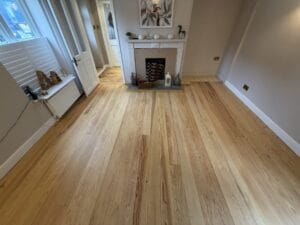
The quality of the result comes down to details.
Choose a team that uses proven dust-free sanding systems and can explain how they manage edges and corners.
Ask what finish would suit your home and lifestyle, not just what looks good on day one… it needs to last, and that will all depend on what it will have to go through.
Make aftercare part of the plan, so your restored floor stays looking right for years, not months.
If you are comparing quotes, the safest approach is to compare like for like, including prep, protection, gap filling, number of sanding stages, and finishing coats, not just a headline price.
The next step
Dust-free sanding is a modern upgrade on traditional floor sanding. It reduces airborne dust, keeps your home cleaner during the job, and supports a better finish, while still delivering the same core goal… a beautifully refinished wooden floor.
If you are still weighing it up, feel free to ask. We will give you a calm, straight answer, and help you decide what suits your home best.