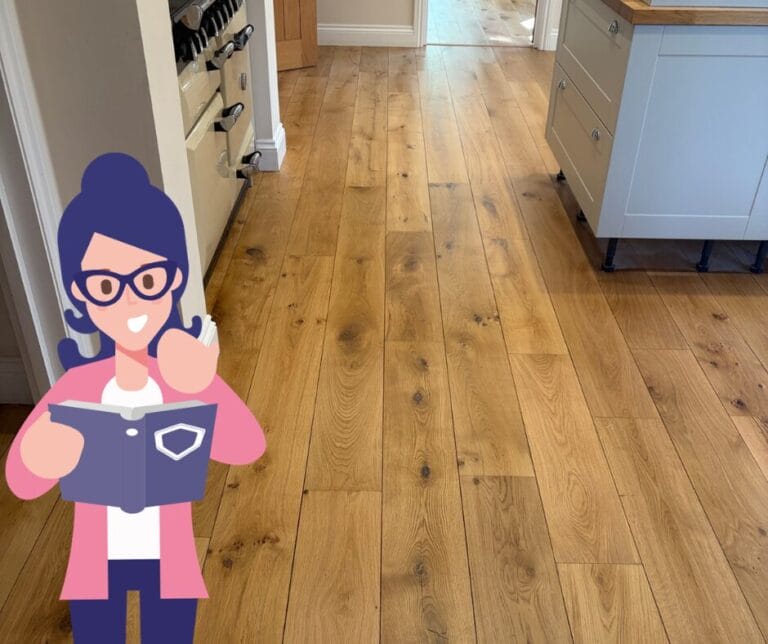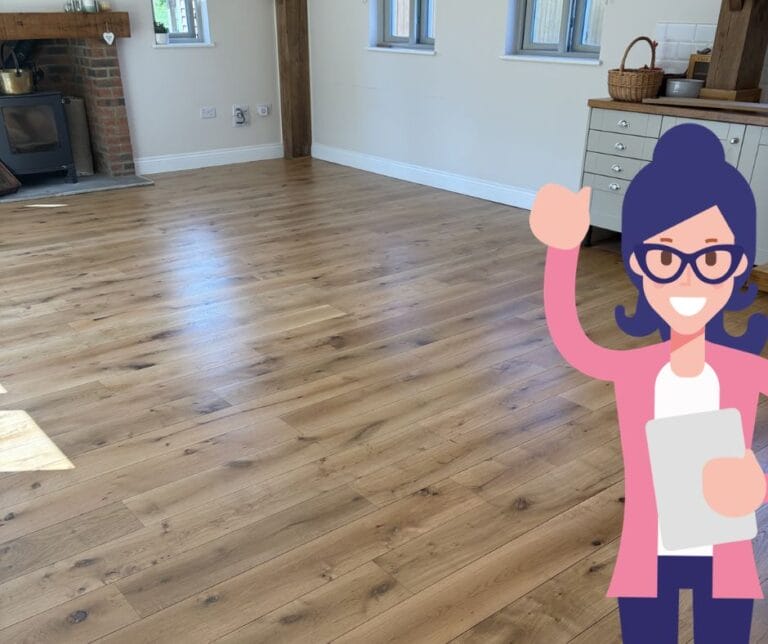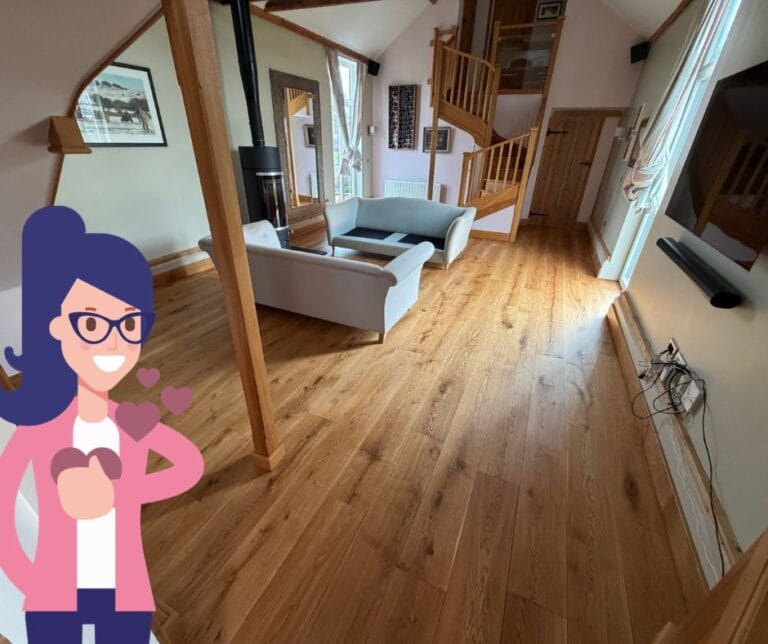
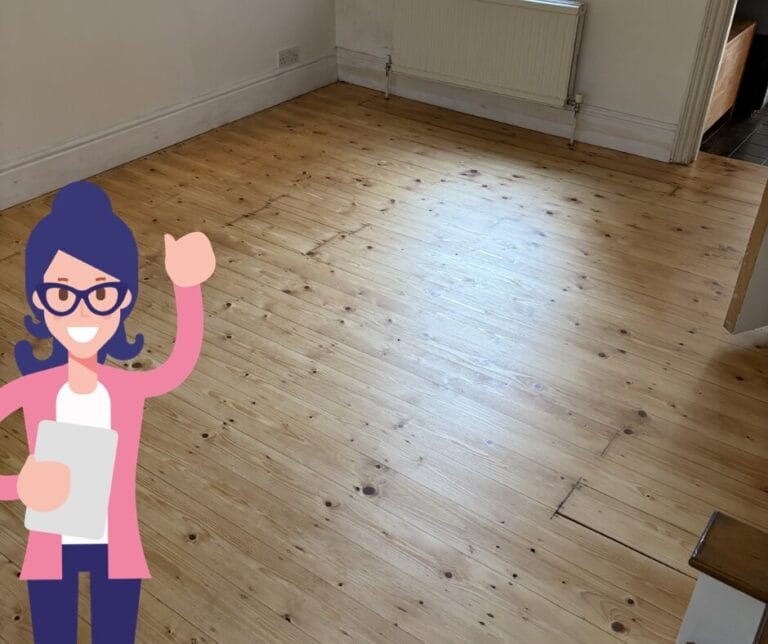
Short answer… How often can you sand a wood floor?
Most solid hardwood floors can be sanded 4 to 6 times during their lifetime, depending on thickness and condition. Engineered wood floors can typically be sanded 1 to 3 times, while laminate flooring cannot be sanded at all. The exact number depends on the thickness of the wood’s wear layer.
Key takeaways
- Solid hardwood floors are often sanded 4 to 6 times over their lifespan (sometimes more with lighter refinishing).
- Each full refinish typically removes roughly 1/32 to 1/16 inch of wood.
- Engineered wood flooring usually allows 1 to 3 sandings, depending on veneer thickness.
- Laminate flooring cannot be sanded because it does not have a real wood wear layer.
- The key limit is the wear layer above the tongue and groove (or above the engineered core).
What happens when you sand a wood floor?
Sanding removes the old finish and a fine layer of timber so the surface is clean, even, and ready to accept stain (if used) and a protective finish. It’s satisfying because it makes the floor look “new” again, but it’s also irreversible, because that wood is physically removed.
A traditional professional sand commonly removes around 1/32 to 1/16 inch of wood (depending on the floor’s flatness, damage, and the sanding sequence).
That is why a floor can be sanded only a limited number of times. Each refinish reduces the remaining wear layer, and once you approach the tongue and groove (or the engineered veneer boundary), the floor may no longer withstand another full sand safely.
How many times can different types of wood floors be sanded?
Different types of flooring behave very differently under sanding, even if they look similar from above. The safest approach is to identify what you actually have before you decide.
- Solid hardwood floors
Most traditional solid wood floors are around 3/4 inch thick, and the usable sanding zone is the wood above the tongue and groove. Many solid floors handle 4 to 6 full sandings over their lifetime, and some guidance suggests 6 to 8 may be possible where there is plenty of wear layer left and the work can be kept light.
Where this gets tricky is damage. If the floor has deep scratches, uneven boards, old adhesive, or heavy staining, a contractor may need a more aggressive first cut, which removes more material. Therefore, the “how many times” number is never a guarantee… it is a range that depends on what has already happened to the floor.
Visual comparison table: sanding limits
| Solid hardwood | 4 to 6 times |
| Thick engineered wood | 2 to 3 times |
| Thin engineered wood | 1 to 2 times |
| Laminate flooring | Not sandable |
(These are typical ranges, not promises. Wear layer depth and previous sanding matter most.)
- Engineered wood floors
Engineered flooring is a real wood top layer (veneer) bonded to a stable core. The veneer thickness varies widely, and that thickness is what determines sanding potential.
A helpful rule of thumb seen across professional guidance is that thin veneers under about 3 mm may not tolerate a full traditional sanding, while a 4 to 6 mm veneer may allow two or three careful sand and refinish cycles over the life of the floor.
If you are unsure, this is exactly where a professional check saves money, because sanding through veneer is one of the costliest mistakes to put right.
- Laminate flooring
Laminate looks like wood, but it is a printed surface layer over composite materials. There is no real wood wear layer to sand back. So if the laminate is damaged beyond minor cosmetic fixes, it cannot be sanded and refinished… Replacement is usually the only proper answer.
Key factors that determine how many times a floor can be sanded
If you want a calm decision, focus on these factors rather than the headline number.
- Floor thickness
Thicker boards will allow you more refinishing cycles simply because there is more material above your board’s structure. A standard solid hardwood floor is normally thick enough and will allow you to do multiple sandings, but thinner boards and some modern profiles are less forgiving.
- Wear layer depth
The wear layer is the portion of real wood available above the tongue and groove (or above the engineered core). If that wear layer is too thin, sanding risks weakening joints or exposing nails.
Professional guidance highlights the tongue-and-groove position as a true limiting factor, as sanding too close to the groove edge can cause splitting or failure.
Some installers and restorers also use a practical threshold where very limited remaining wear makes sanding a poor risk, especially if there are already low spots or movement.
- Wood species
Hardwoods such as oak (including white oak) generally cope better with wear and repeated refinishing than softer woods such as pine, because they resist denting and deep gouges in day-to-day life. The sanding itself still removes wood, but harder woods often need less aggressive correction between refinishes, which helps preserve the wear layer.
- Existing floor damage
This is where the decision becomes personal to your home. Deep scratches, water marks, pet damage, cupping, uneven boards, and heavy staining often require more levelling. But more levelling means more wood removed. Therefore, a floor in poor condition may have fewer safe refinishes left than a similar floor that has been gently maintained.
How often should you sand hardwood floors?
Many homes do not need frequent sanding. A common guideline is every 7 to 10 years, depending on foot traffic, pets, and how well the finish is protected.
But it’s worth knowing that sanding is not the only maintenance option. If the wood itself is sound and it’s mainly the finish that has dulled, a buff and recoat (often called screen and recoat) can refresh the surface without removing the same amount of timber as a full sand.
This matters because homeowners often jump to sanding too early. But if a recoat would do the job, then you keep more of the floor’s future lifespan in reserve.
Signs your wood floor should be sanded
If you are seeing these issues, a full refinish may be the right next step:
- Deep scratches or gouges that catch a fingernail
- Stains that cannot be cleaned out of the surface
- A finish that has worn through in high-traffic lanes
- Uneven colour patches where the old finish has broken down
- Water marks that have penetrated beyond the finish layer
If it’s mainly light surface scratching and dullness, a professional can often advise whether recoating would restore the look without a full sand.
When sanding a wood floor, it is not recommended.
Sometimes sanding feels like the obvious fix, but it is not the safe one.
Sanding may not be recommended if the floor has already been sanded too many times, if the wear layer is too thin, or if you can see structural warning signs like visible nail heads or exposed tongue and groove lines. Those are the indicators that tell us there isn’t enough of the wood left that we safely sand.
Severe warping, widespread movement, or boards that have broken down at the joints can also mean restoration needs a different plan, such as replacing isolated boards, tightening fixings, or addressing moisture issues first.
Alternatives to sanding wood floors
If your main goal is to make the floor feel cared for again, these options can be a better fit than immediate full sanding.
- Screen and recoat
A light abrasion of the existing finish, then a fresh top coat. It is ideal when the finish is dull or lightly scratched, but the wood itself is not deeply damaged.
- Buffing
Helps reduce the appearance of minor surface scratches and refreshes the look between larger restorations.
- Spot repairs
Localised sanding and repair of damaged boards or small areas, often paired with blending and refinishing. Useful when one section has taken the hit, but the whole floor does not need removing back to bare timber.
These approaches can extend the floor’s lifespan because they remove far less wood, and they delay the moment when a full sanding becomes too risky.
Tips on how to make your hardwood floors last longer…
A little prevention goes a long way, especially in busy homes.
Use felt pads under furniture, keep grit and small stones from building up at entrances, and use rugs in high traffic zones where it makes sense. Clean regularly with wood-safe products, and avoid excess moisture that can cause swelling or staining.
Most importantly, protect the finish. If you recoat every few years (when it is appropriate), you can often delay the need for a full sand for a long time, which helps protect the wear layer and the long-term value of the floor.
Finally
Most solid hardwood floors can be sanded 4 to 6 times, sometimes more, when conditions allow, and the wear layer is generous. Engineered wood floors have a more limited window, often 1 to 3 times, because veneer thickness is the limiting factor.
If you are unsure, the most sensible next step is to measure what you can, then get a professional opinion before committing to another sand. It’s not just about getting the floor looking beautiful again… It’s about protecting what you have left.
If you’d like, we can help you sense check what type of flooring you have and whether sanding is still the safest option, with calm advice and no pressure.