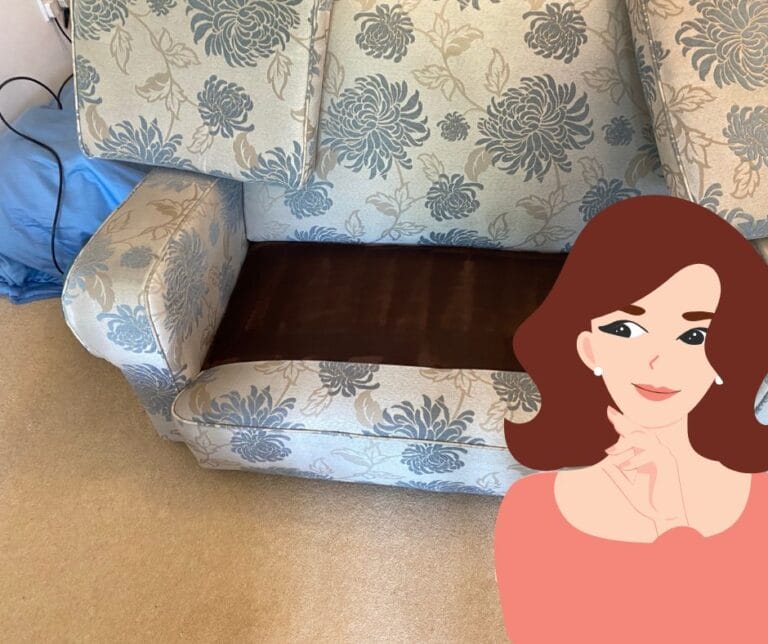
Upholstery Doesn’t Behave Like a Kitchen Counter
Sofas, armchairs, footstools… they’re all made with layers. Fabric blends. Foam cores. Seams and stitching.
Unlike the kitchen floor, you can’t just wipe and move on.
That surface-level cleaner might lift the stain visually. But often it leaves a little more behind:
a residue that stiffens the fabric,
a scent that clings,
a shadow of the original mark that resurfaces days later.
In some cases, the foam padding holds the moisture… and without full drying, the cushion begins to smell.
We’ve met families who thought they’d solved a problem, only to find their sofa smelling “off” weeks later.
One client in Cambridge thought they’d done the right thing after an orange juice spill… quick spray, quick scrub. But within a fortnight, the patch had stiffened, and the smell lingered.
When we visited, we found residue trapped deep in the foam. A gentle clean and proper extraction solved it… but it’s a reminder that even well-meaning efforts can complicate things.
The First Response Can Fix the Problem… or Set It
We’re not here to criticise those quick instincts. But we do want to offer an alternative.
Often, it’s not the spill that creates a lasting problem… it’s what happens in the minutes after.
Applying a cleaner designed for laminate or tile can react with the dyes or coatings used in upholstery fabrics.
Sometimes it causes bleaching. Other times, it changes the texture completely.
What starts as a helpful blot becomes a patch that no longer feels the same.
You Might Be Cancelling Out Your Warranty Without Realising
It’s tucked into the paperwork, but many sofas come with care requirements.
These often specify professional cleaning methods only.
Using a generic or homemade spray might seem harmless… until you discover it’s made your warranty void.
We’ve had clients who only found out after a seam split or a fade line appeared. By then, the manufacturer had every right to refuse coverage.
Before You Reach for the Spray… Pause Here
It’s natural to want to “fix it fast”.
But every fabric, foam and seam responds differently.
Here’s what to consider first:
- What’s the fabric made of? Microfibre, wool blends, linen… each has its own chemistry.
- Did the spill reach the cushion core? Surface wipes won’t dry deep foam.
- Does the cleaner mention upholstery? If not… it’s probably not designed for it.
Even a clean-looking patch might hold damage you won’t see until later.
That pause? It protects more than fabric. It protects peace of mind.
A Simpler Way to Handle Spills
Step back. Take a breath.
Use a dry towel and gently blot the area, without pressing or rubbing. Let the fabric breathe.
And if you’re not sure what to do next, reach out. We’ll talk it through with you.
At Art of Clean, we’re not here to sell a clean you don’t need.
We’re here to help you protect your space before damage sets in.
Our team uses safe, fabric-specific methods designed to lift marks, remove odours, and care for your upholstery without stress.
Whether you’ve got a family-sized corner unit or a beloved old armchair, the goal is the same:
preserve comfort, avoid disruption, and gently restore what matters.
Explore our upholstery cleaning service to see how we tailor care to your furniture.
Next time something spills, you’ll know:
breathe first, blot gently… and if you need a second opinion, we’re just a message away.
Whether it’s a call, a visit, or simply reassurance… we’re happy to be part of the solution.
You don’t have to figure it out alone.
Not in our catchment?… that’s okay too… check out the NCCA – National Carpet Cleaning Association, they have a database of all companies across the UK.